

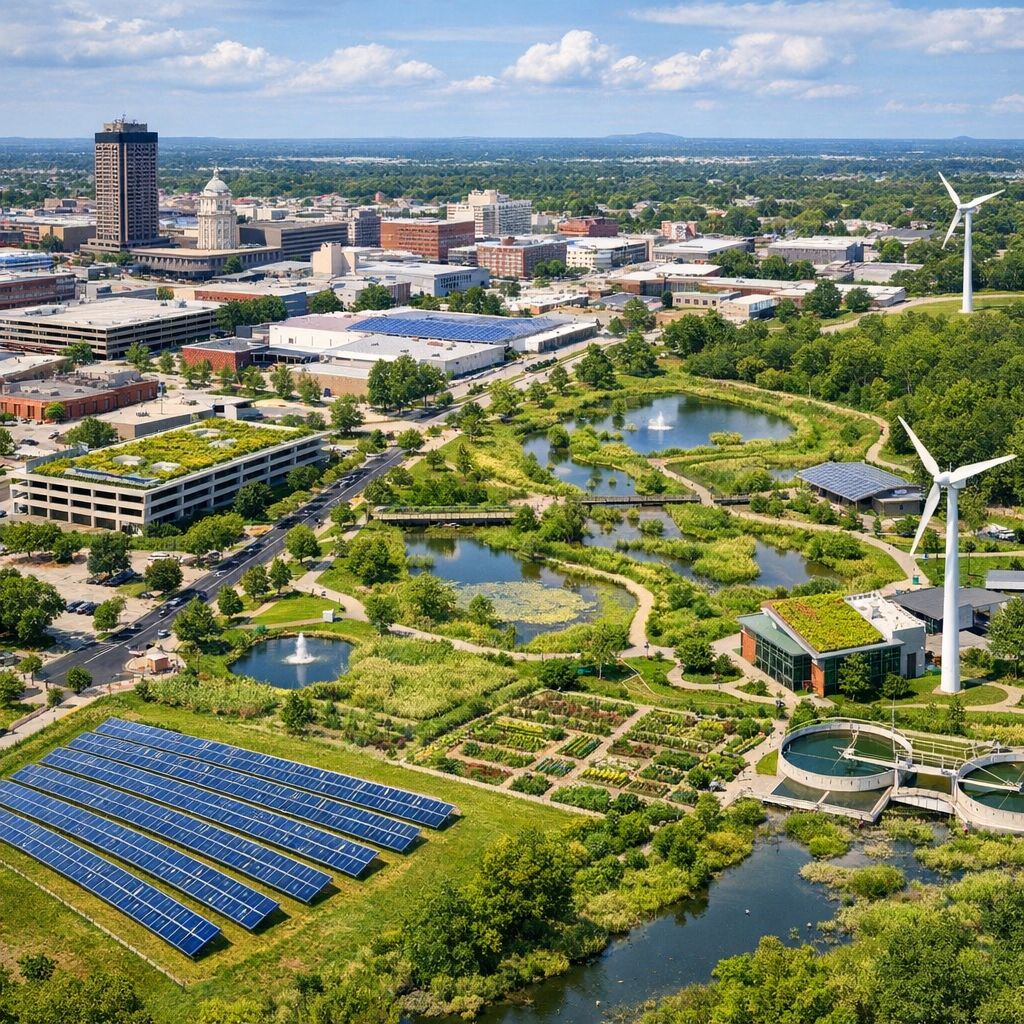
Springfield, Missouri, has long been recognized for its proactive approach to environmental sustainability. Through a combination of green infrastructure projects, renewable energy initiatives, and community engagement programs, the city continues to set a precedent for environmental stewardship.
Green Infrastructure Projects
One notable endeavor is the Fairgrounds Green Infrastructure Project, completed in November 2024. This $1.7 million project introduced rain gardens with native plantings, pervious pavers, and a hydrodynamic separator to manage stormwater effectively. These features not only mitigate flooding risks but also enhance water quality by filtering pollutants before they enter local waterways.
Another significant project is the Renew Jordan Creek initiative. With an estimated cost of nearly $22.4 million, this project aims to uncover approximately 1,200 linear feet of Jordan Creek, currently enclosed in concrete box culverts. The plan includes creating a mixed-use urban park adjacent to the creek, serving as a community gathering space while reducing downtown flooding and improving the creek’s ecological conditions.
Renewable Energy and Emission Reductions
City Utilities of Springfield (CU) has made substantial strides in reducing carbon emissions. Since 2025, CU has achieved a 30% reduction in carbon emissions and is advancing toward a 70% reduction by 2035, with a goal of reaching net zero by 2050. These efforts are part of CU’s commitment to providing reliable, affordable, and environmentally responsible energy to the community.
Community Engagement and Education
Springfield’s Environmental Services Department offers various programs to educate and engage residents in sustainable practices. Initiatives like the Yard Ethic program promote environmentally friendly lawn care, while the Clean Pavement Initiative encourages proper disposal of pollutants to protect water quality. Additionally, the city supports the Green for Greene program, an environmental workforce development and job training initiative that has trained over 300 students since 2016, equipping them with skills for careers in environmental fields.
Transforming Contaminated Sites
The city has also focused on revitalizing contaminated sites. A prime example is the transformation of the Fulbright Landfill Superfund Site into a section of the Fulbright Spring Greenway Trail. This 1.5-mile trail connects Ritter Springs Park with Lost Hill Park, providing residents with recreational opportunities while repurposing previously unusable land.
Through these comprehensive efforts, Springfield demonstrates a steadfast commitment to environmental sustainability, ensuring a healthier and more resilient community for current and future generations.