

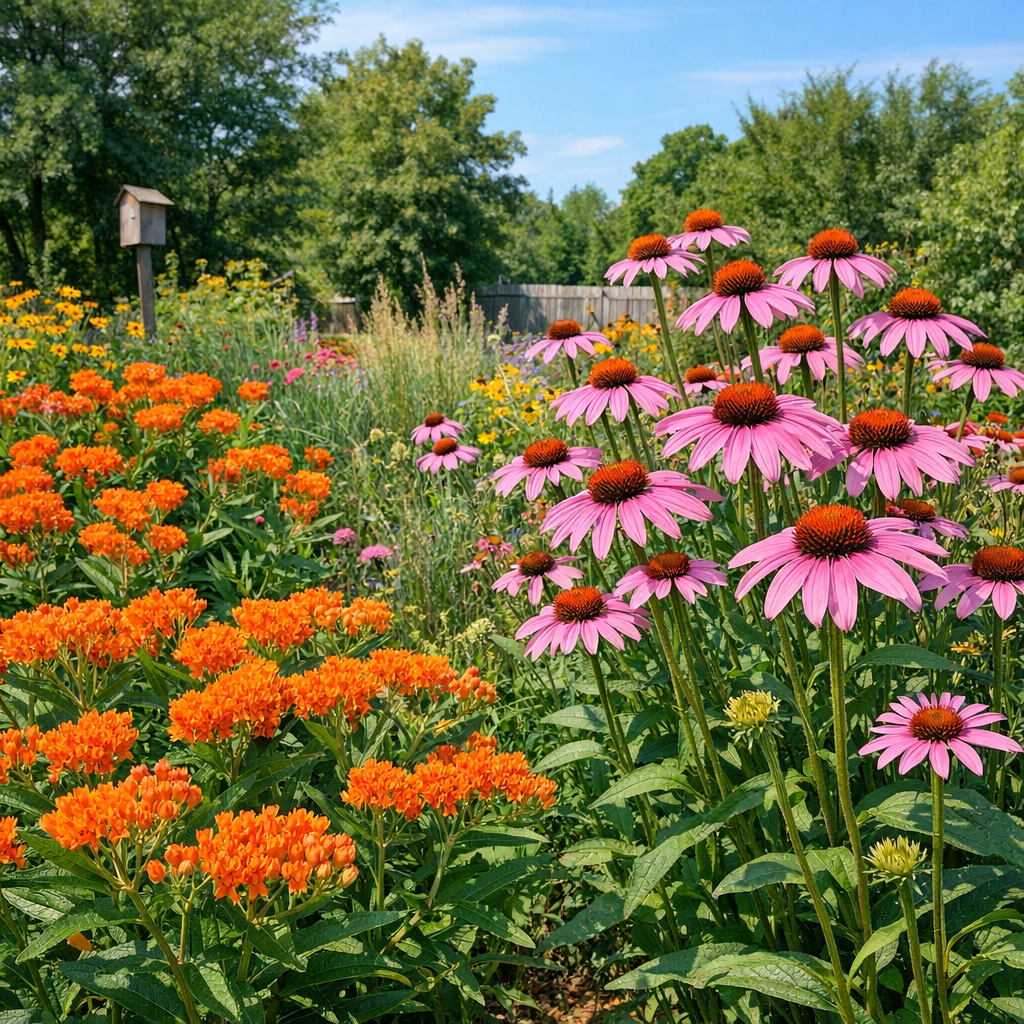
Gardening enthusiasts in Springfield are increasingly turning to native plants to create sustainable and vibrant landscapes. Native plants, having evolved in our local environment, offer numerous advantages over non-native species, including reduced maintenance, enhanced support for local wildlife, and improved resilience to local climate conditions.
Why Choose Native Plants?
Native plants are adapted to Springfield’s climate and soil, requiring less water and fewer fertilizers. This adaptation leads to lower maintenance and more sustainable gardening practices. Additionally, they provide essential habitats and food sources for local wildlife, including pollinators like bees and butterflies, thereby supporting biodiversity.
Top Native Plants for Springfield Gardens
Perennials
- Butterfly Milkweed (Asclepias tuberosa): Known for its vibrant orange flowers, this plant blooms from June to August and thrives in full sun with low water requirements. It’s a critical host plant for monarch butterflies.
- Purple Coneflower (Echinacea purpurea): Blooming from June to September, this hardy perennial attracts native bees and provides seeds for goldfinches. It prefers full sun and is tolerant of heat and drought.
- Wild Columbine (Aquilegia canadensis): With unique nodding flowers, it blooms from April to June and is a favorite of hummingbirds. It tolerates dry shade and self-seeds freely.
Shrubs
- American Beautyberry (Callicarpa americana): This shrub offers rust-red fall color and provides nesting sites for sparrows. It’s drought-tolerant and grows to a height of 2–4 feet.
- Native Azalea (Flame Azalea) (Rhododendron calendulaceum): Known for its spring spectacle, this shrub reaches heights of 4–8 feet and adds vibrant color to the landscape.
Grasses
- Little Bluestem (Schizachyrium scoparium): This grass adds texture and movement to gardens, thriving in full sun and well-drained soils.
- Indian Grass (Sorghastrum nutans): Known for its golden plumes, it provides habitat for wildlife and thrives in sunny areas.
Incorporating Native Plants into Your Garden
To successfully integrate native plants into your garden:
- Assess Your Site: Understand the specific conditions of your garden, including soil type, sunlight, and moisture levels.
- Select Appropriate Plants: Choose native species that match your garden’s conditions and your aesthetic preferences.
- Plan for Diversity: Incorporate a variety of plants to ensure continuous bloom and support a range of wildlife.
- Prepare the Soil: While native plants are adapted to local soils, ensuring good drainage and removing invasive species will help them establish more effectively.
- Implement Efficient Watering Practices: Water plants deeply during establishment, then reduce watering as they become established.
Local Resources and Inspiration
Springfield offers several resources for gardeners interested in native plants:
- Springfield Botanical Gardens: Located at Nathanael Greene/Close Memorial Park, these gardens feature a variety of native plant displays and provide educational opportunities for gardeners.
- Government Plaza Rain Gardens: This area showcases native plantings designed to manage stormwater runoff, offering practical examples of native landscaping in urban settings.
By embracing native plants, Springfield gardeners can create beautiful, low-maintenance landscapes that support local ecosystems and contribute to the community’s environmental health.